


BlogTuesday, April 14 2026
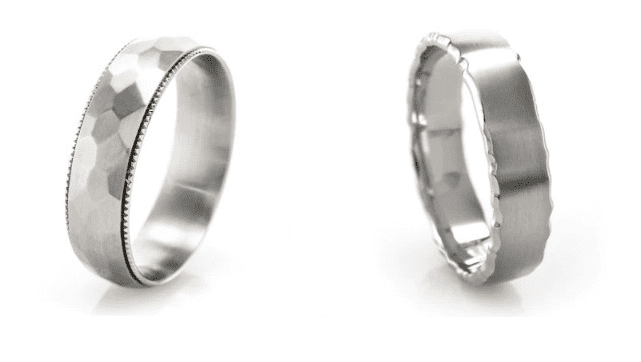 Platinum and palladium belong to the same group of rare metals, which makes them visually similar. But their similarities extend beyond mere visual resemblance. Both materials are valued in the jewelry and industrial sectors, possess high corrosion resistance, and are used in catalysts. At the same time, differences in their properties and value are important for investors and manufacturers, as the palladium vs platinum price chart is often the subject of analysis and comparison in global markets. Why Compare Palladium and Platinum?Platinum and palladium belong to the same group of metals, but their market development and applications differ. Platinum has been used for longer and has a stable position in the industry and jewelry. Palladium has become in demand in recent years, especially for use in automotive catalysts. When choosing between these metals for investments or practical use, it is important to consider their differences in properties and price dynamics. This helps make more informed decisions by comparing palladium price vs platinum and other characteristics. Composition and Properties of Each MetalIt is important to compare not only the platinum vs palladium price, but also the physical and chemical properties. They will help to better understand the characteristics of these metals.
Price Trends Over the Last 10 YearsIn 2020, demand for platinum was weak due to quarantine restrictions, but later it began to grow. China increased its reserves, and new environmental regulations became a driver for palladium price growth. Its price has increased more than fourfold and continues to rise, as production is limited while demand exceeds supply. Around 225,000 tons are mined annually, while demand reaches 265,000, keeping the price consistently high. Several factors influence market dynamics:
These aspects show that palladium remains a scarce resource, and its price moves according to a logic similar to that of silver: it rises during periods of industrial growth and falls during a downturn. Platinum, on the other hand, gradually strengthens its position as demand rises and supply declines. Why Palladium Became More Expensive RecentlyIn 2025, the situation in the precious metals market changed: supply decreased, and demand grew again. This led to a noticeable price increase and strengthened investor interest. The main factors that influenced the dynamics:
These changes indicate that both metals have entered a new stage of market development, in which limited supply and high industrial demand shape price trajectories. Investment Value: Which Metal Performs Better?Platinum is a predictable asset. Its market has long been established, characterized by high liquidity and stable price dynamics. Platinum is used in industry and jewelry, which supports demand and makes investments more reliable. Palladium remains less stable. Its market is smaller in volume, so price fluctuations occur more frequently. Despite growing investor and industry interest, palladium's liquidity is lower than that of platinum. In the context of palladium vs platinum vs gold price, gold is traditionally perceived as a benchmark of stability and a "safe haven" for capital, while platinum and palladium provide an opportunity to diversify a portfolio. Palladium vs Platinum in JewelryPlatinum is valued for its natural white color, bright shine, and resistance to tarnishing. That is why it is often chosen for making wedding and engagement rings, as well as luxury watches. Palladium has become in demand due to its light weight and lower price. Visually, it resembles platinum but is lighter. For those who want to achieve a similar aesthetic effect without the high cost, palladium will be an attractive alternative. Pawn Shop Resale Value for Both MetalsWhen evaluating gold scrap, attention is paid to the metal's purity and weight. The range usually covers from 375 to 999, and investment bars and coins are typically 999.5/1000 purity. Jewelry is most often 950/1000 or higher in purity. At the same time, the gold market is volatile, and price fluctuations can significantly affect the final valuation even with identical product characteristics. Tuesday, April 14 2026
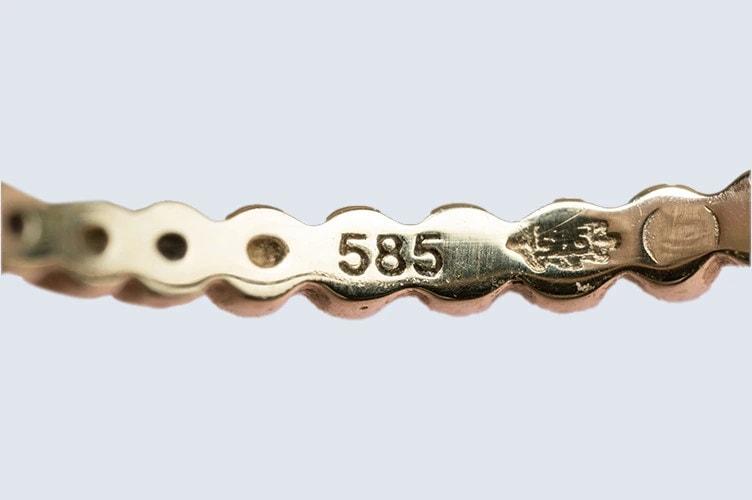 Stamps and marks are signs with main information about the metal composition, the manufacturer, and sometimes the place or time of production. These marks allow you to determine the jewelry's authenticity at first glance. Understanding jewelry stamp meanings helps distinguish a genuine piece from a counterfeit and assess its quality and value. Jewelry Stamps Definition and Why Do They MatterSpecial marks are often found on jewelry. These are combinations of symbols, numbers, or letters that carry information about the item itself. Such marks can indicate the metal's fineness, its origin, age, or alloy composition. They can be found on rings, bracelets, and pendants, usually on the inner or less-visible side. Gold StampsGold jewelry stamp meanings are classified by karat, which indicates the percentage of pure metal in a piece of jewelry. The higher the number, the brighter the color and softer the texture, while the lower the number, the stronger the piece and the more impurities it contains:
This grading helps determine a jewelry piece's durability, value, and suitability for everyday use or as an investment. Silver StampsTo determine the silver quality, use a system of hallmarks. The highest hallmark is 999, which is almost pure silver, soft, and more often used for exclusive items. The 950 hallmark is found in high-class jewelry, while 925, known as sterling silver, is considered the international standard and is used in most jewelry. Sometimes, the inscription "Sterling" can be found, which also indicates this level of quality. Platinum & Palladium StampsThe most common hallmark for platinum jewelry is 950. It is important not to confuse it with palladium, as both metals use the same numerical value. The difference lies in the shape of the mark. For platinum, the number 950 is placed in a trapezoidal outline, while for palladium, it is placed inside an oval or "bubble". Maker’s Marks and Country StampsMaster's marks are small symbols, initials, or letters engraved on jewelry. They indicate the manufacturer and help determine the item's origin. Different countries use unique marks. In France, an eagle indicates 18-carat gold, a shell 14-carat, a clover 9-carat, the head of Minerva means 925 silver, and an owl confirms an imported item. In the United Kingdom, a leopard's head indicates the London Assay Office, an anchor for Birmingham, a rose for Sheffield, and a castle for Edinburgh. In Italy, a numerical code of the province is used along with the master's initials. Historically, in the Netherlands, a sword mark was used to verify the purity of precious metals. Special SymbolsWhat does a star stamp on jewelry mean? These are miniature testimonies of the traditions and standards of different countries. They are applied to gold, silver, or platinum and serve two functions: they confirm the metal's authenticity and add a decorative accent. The symbols reflect the craftsmanship of jewelers and the cultural context in which the piece was created. Other additional symbols can also be found on jewelry. These can be emblems of assay offices, marks of anniversary collections, or signs of a special metal-processing technology. How Pawn Shops Use Stamps to Verify JewelryThe pawnbroker begins the inspection by examining the jewelry. They look at the stamps and hallmarks, assess wear and details. They use a magnifying glass to notice small signs of authenticity. Gold is tested with a magnet. It should not be attracted to it. For accuracy, acid tests are used to determine the level of purity. Today pawnshops use electronic tools and XRF analyzers to check metal composition without damaging the item. Stones are checked separately. Diamonds are tested for thermal conductivity; colored stones may be sent for examination. Clarity, cut, and weight affect the price. It is important to understand what does a diamond stamp on jewelry means, as this mark confirms the presence of a diamond or indicates a hallmark related to the stone, and helps to distinguish an original from an imitation. How to Identify Fake or Misleading StampsBefore buying, it is essential to learn how to choose jewelry correctly. Learn about the main signs of fakes.
What to Do If Jewelry Is Without a StampDoes all gold jewelry have a stamp? No, and this is not always a sign of a fake. You can check authenticity in various ways:
Even without a hallmark, a piece of jewelry can be recognized as genuine if it is examined by an expert and properly cared for. |
